All Objects Record
Images

Additional Images [3]
Metadata
Object Name |
Medicine Bottle |
Object ID |
2010.005.15.01 |
Date |
1960s |
Description |
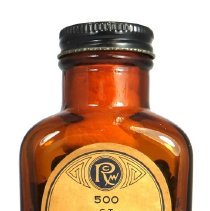
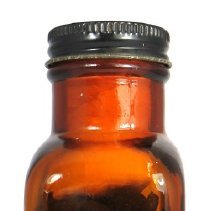
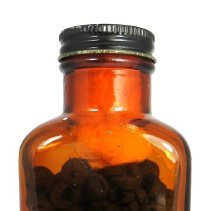
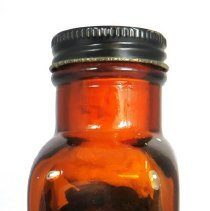
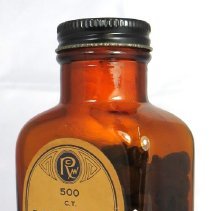
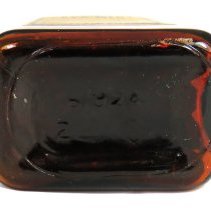
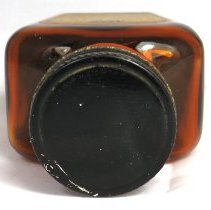
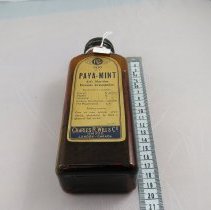
Square bottle, brown glass, white label that is faded brown with blue ink writing, black metal cap, cotton or other cloth ball inside along with brownish-black cylindrical pills |
Dimension Details |
19 x 7 x 5 |
Materials |
Glass, metal, paper, ink, Paya Mint: papain 3/4 grain, pepsin 1/2 grain, ch |
Manufacturer |
Distributor Label: Charles R. Will & Co. Limited, London - Canada |
Inscription Type |
Other Markings |
Inscription Text |
Front Label: Blue circular design with letters: Rcxw / 500 C.T. / PAYA-MINT / Aids Digestion Prevents fermentation. / Each tablet contains: papain 3/4 grain, pepsin 1/2 grain, charcoal 1 grain, sodium bicarbonate 3 grains, oil peppermint q.s. / Directions: One or two tablets after meals, dissolved in a half a glass of hot water / 49889 / Charles R. Will & Co. Limited, London - Canada |
People |
Wilensky, Hyman |
Owned By |
Wilensky, Dr. Hyman |
Donated By |
Chernick, Drs. Beryl and Noam (Beryl is Wilensky's daughter) |
MeSH Search Terms |
Pharmaceutical Preparations Pharmacy |
Research Notes |
Paya-Mint - For digestion; contains papain (from papaya, an enzyme that breaks down protein, used for digestion, pain, inflammation), pepsin (stomach enzyme that breaks down protein); charcoal (anti-fermentative), sodium bicarbonate (reduces stomach acid), oil peppermint (carminative and flavouring agent). Papaya Mint tablets are still sold today as alternative health products to help with digestion. The name "Paya-Mint" comes from the main ingredient, papain, found in papayas, and peppermint oil, the main flavouring agent. Papain as an enzyme was first investigated and named in the late 1800s, but had been used by Indigenous South Americans as a meat tenderizer since before European contact. Papain was also used to loosen the membranes which built up in the throat in cases of diphtheria. It has also had various topical uses, though these have been controversial. Charles R. Will & Co.: active in 1935. It was acquired by Labatt in 1962 when Labatt started to make and distribute pharmaceuticals. The company gave out prizes in the 1940s and 1950s to Western University students in their final year who wrote the best essays in topics like pharmacology and therapeutics. Advertised themselves as makers of "ethical pharmaceutical products." |